Archivo del Autor: JUAN MARIO ALVA MATTEUCCI
EL CARÁCTER VINCULANTE DE LAS CASACIONES
MARIO ALVA MATTEUCCI
El recurso de casación constituye un mecanismo por el cual la Corte Suprema de la república verifica si existe la comisión de una infracción en la aplicación normativa por parte de las distintas instancias del Poder Judicial, existiendo la posibilidad de que se determine que una sentencia se case, cuando existe una errónea aplicación del derecho al caso ventilado por las partes en la vía judicial.
Su finalidad no es que se verifique un nuevo análisis de las pruebas presentadas, por medio de una revalorización de los hechos; sino que solo se verifica, como se indicó, la correcta aplicación del derecho. En pocas palabras, no se permite que se emita un nuevo pronunciamiento judicial sobre el fondo del asunto materia de litigio.
En este sentido, se aprecia que el recurso de casación actualmente está siendo utilizado para poder revisar pronunciamientos que involucren materia tributaria y, en algunos casos, cuando la Corte Suprema las emite, se indica que la misma califica como un precedente vinculante.
LA FISCALIDAD DEL HIDRÓGENO VERDE: OPORTUNIDADES Y DESAFÍOS
MARIO ALVA MATTEUCCI
RESUMEN
El mundo actualmente procura disminuir el uso de combustibles fósiles, con el fin de evitar la contaminación ambiental y reducir la emisión de gases con efecto invernadero. Por ello, se está considerando el uso del hidrógeno verde como un combustible limpio y renovable. Pese a ello, su producción requiere del concurso de otro tipo de energías como la solar o la eólica, además del uso de grandes cantidades de agua y un proceso químico de electrólisis. Aún así, se aprecia que los beneficios de su consumo permiten mantener un ambiente menor de contaminación, requiriendo de algún modo un marco tributario acorde para poder masificar su uso.
PALABRAS CLAVE: hidrógeno verde / carbono / combustible limpio / electrólisis / energía solar / energía eólica
ABSTRACT
The world is currently trying to reduce the use of fossil fuels in order to avoid environmental pollution and reduce greenhouse gas emissions. Therefore, the use of green hydrogen is being considered as a clean and renewable fuel. However, its production requires the use of other types of energy, such as solar or wind power, as well as the use of large quantities of water and a chemical electrolysis process. Even so, it is appreciated that the benefits of its consumption allow maintaining a less polluted environment, requiring somehow a tax framework to be able to massif its use.
KEYWORDS: green hydrogen / carbon / clean fuel / electrolysis / solar energy / wind energy
TITLE: Green Hydrogen Taxation: Opportunities and Challenges
Si desea revisar el informe completo (SOLO EN ESPAÑOL) debe ingresar aquí: LA FISCALIDAD DEL HIDROGENO VERDE – OPORTUNIDADES Y DESAFIOS
If you want to review the full report (ONLY IN SPANISH) you must enter here: LA FISCALIDAD DEL HIDROGENO VERDE – OPORTUNIDADES Y DESAFIOS
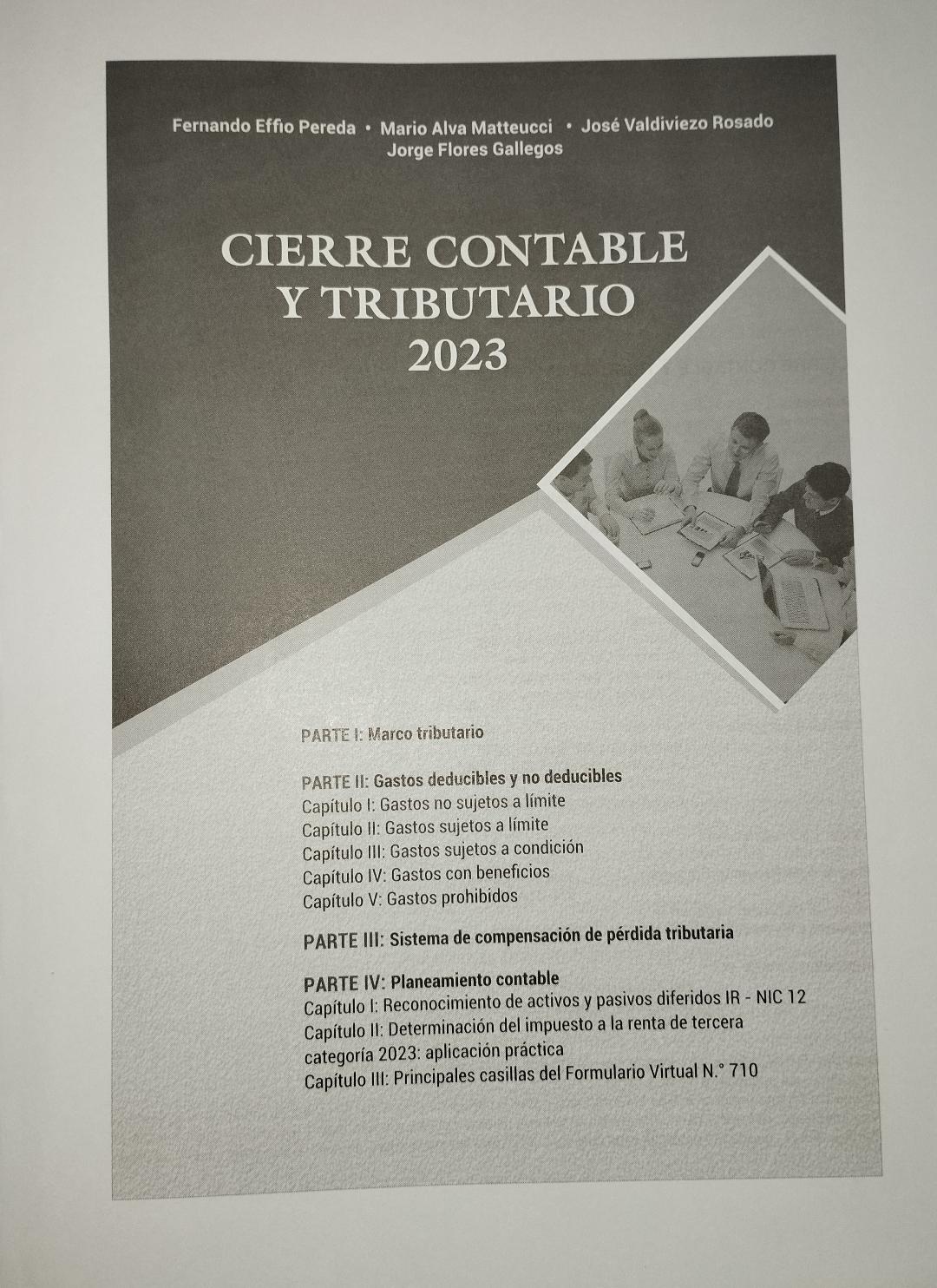
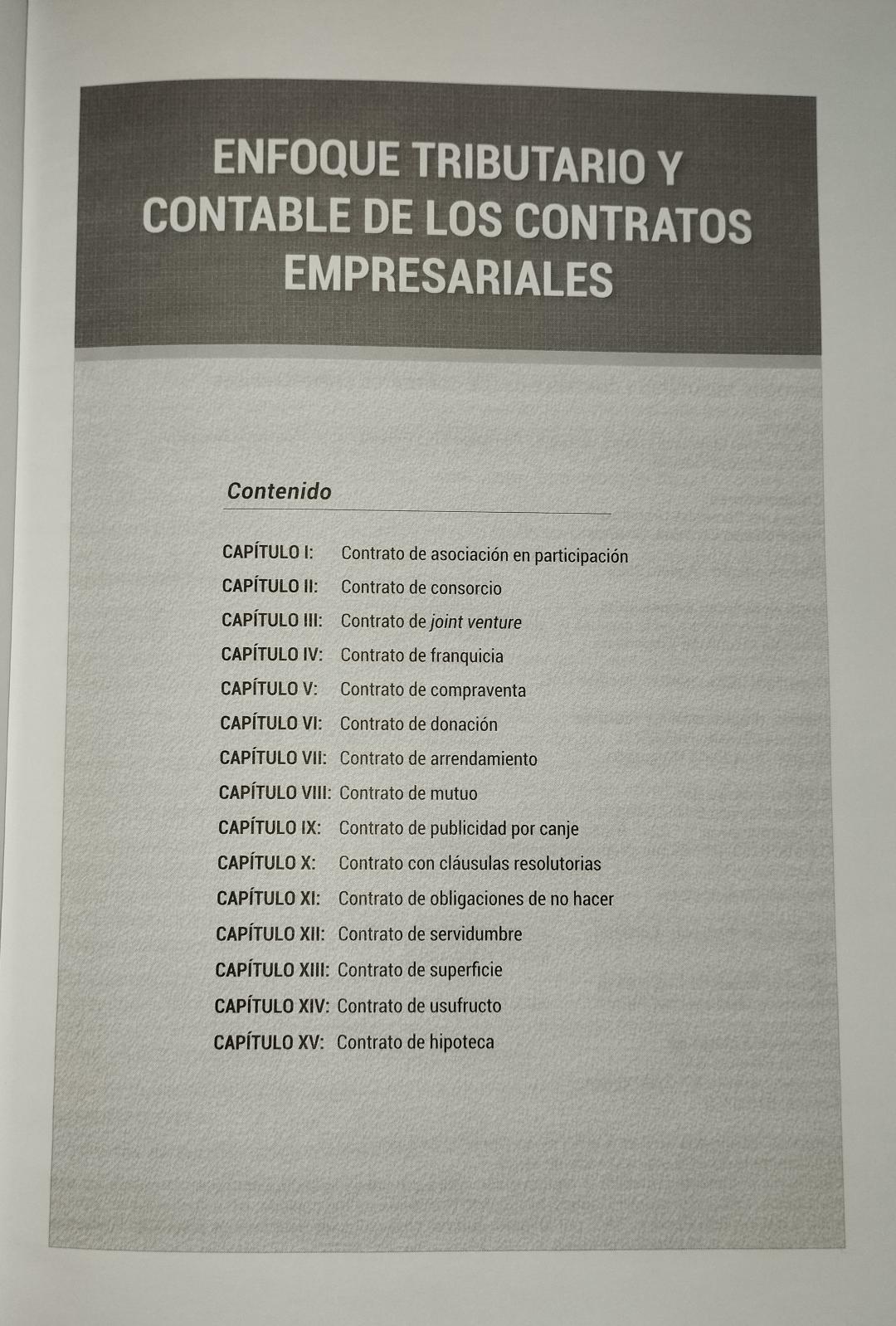
LIBRO: FISCALIZACIÓN SUNAT: Análisis y respuestas a los principales requerimientos, infracciones y sanciones
FICHA TÉCNICA
Autores:
Mario Alva Matteucci
Fernando Walter Effio Pereda
José Antonio Valdiviezo Rosado
Jorge Flores Gallegos
ISBN: 978–612-322-450-9
Páginas: 543
Editorial: Instituto Pacífico SAC
Impresión a cargo de: Pacífico Editores SAC
Primera edición
Lima, junio 2023
¿Cómo adquirir esta publicación?
Para adquirir el libro deben comunicarse a los siguientes teléfonos:
- 989253036
- 943415074
El precio del libro es S/ 160
Si se menciona esta publicación al momento de su compra e indica “ALVA”, el precio del libro será de S/ 140.
¿CUÁNDO EL “O” Y EL “Y” GENERAN EFECTOS TRIBUTARIOS?: DISYUNCIÓN Y CONJUNCIÓN
MARIO ALVA MATTEUCCI
ABSTRACT
The purpose of this article is to show how in the texts of the rules that regulate various taxes, situations in which logical operators are applied must be taken into consideration, such as the case of disjunction (represented by the letter “or”), to validate various alternatives in the reading of the rules; as well as conjunction (represented by the letter
“and”), when determining the application of various requirements that must be complied with in their entirety. This article does not intend to develop criteria or methods of interpretation to be applied in tax matters.
Keywords: disjunction / conjunction / union / alternatives / options / logical operators.
Title: When Do “Or” and “And” Generate Tax Effects?: Disjunction and Conjuction
RESUMEN
El presente artículo tiene por propósito mostrar cómo en los textos de las normas que regulan diversos tributos se debe tener en consideración situaciones en las cuales se aplican los operadores lógicos, como es el caso de la disyunción (representado por la letra “o”), para validar diversas alternativas en la lectura de las normas; como también la conjunción (representado por la letra “y”), cuando se determina la aplicación de varios requisitos que deben ser cumplidos en su integridad. El presente artículo no pretende desarrollar criterios ni métodos de interpretación a aplicar en materia tributaria.
Palabras clave: disyunción / conjunción / unión / alternativas / opciones / operadores lógicos
Si desea revisar el informe completo (SOLO EN ESPAÑOL) debe ingresar aquí: CUANDO EL O Y EL Y GENERAN EFECTOS TRIBUTARIOS – DISYUNCION Y CONJUNCION
If you want to review the full report (ONLY IN SPANISH) you must enter here: CUANDO EL O Y EL Y GENERAN EFECTOS TRIBUTARIOS – DISYUNCION Y CONJUNCION
CONDICIONES DE TRABAJO: ALGUNAS CONSIDERACIONES TRIBUTARIAS
MARIO ALVA MATTEUCCI
ABSTRACT
For workers to be able to perform their work without problems, employers provide them with certain goods, which in doctrine are known as “working conditions”, which do not qualify as a remunerative advantage in favor of the worker but allow them to provide their services better. These conditions do not qualify as a remunerative concept, for which reason they are not subject to fifth category income tax withholding. However, there may be cases in which the granting of the working conditions does constitute a benefit in favor of the employee, for which reason it would qualify as a remunerative advantage, and therefore it will be subject to the withholding of the fifth category income tax.
KEYWORDS:
subordination / employment income / fifth category / working condition / remuneration / dependency relationship / remunerative concept
TITLE: Working Conditions: Some Tax Considerations
RESUMEN
Para que los trabajadores puedan desarrollar sus labores sin problemas, los empleadores les entregan ciertos bienes, que en doctrina se les conoce como “condiciones de trabajo”, los cuales no califican como una ventaja remunerativa a favor del trabajador, sino que permiten prestar mejor sus servicios. Estas condiciones no califican como concepto remunerativo, motivo por el cual no se encuentran afectas a la retención del impuesto a la renta de quinta categoría. Pese a ello, pueden presentarse casos en los cuales el otorgamiento de las condiciones de trabajo sí constituye un beneficio a favor del trabajador, motivo por el cual ello sí calificaría como una ventaja remunerativa, por lo que se encontrará sujeto a la retención del impuesto a la renta de quinta categoría.
PALABRAS CLAVE:
subordinación / rentas de trabajo / quinta categoría / condición de trabajo / remuneración / relación de dependencia / concepto remunerativo
Si desea revisar el informe completo (SOLO EN ESPAÑOL) debe ingresar aquí: CONDICIONES DE TRABAJO – ALGUNAS CONSIDERACIONES TRIBUTARIAS
If you want to review the full report (ONLY IN SPANISH) you must enter here: CONDICIONES DE TRABAJO – ALGUNAS CONSIDERACIONES TRIBUTARIAS
DEVOLUCIÓN DEL IGV A LOS TURISTAS EXTRANJEROS: ASPECTOS A CONSIDERAR
MARIO ALVA MATTEUCCI
ABSTRACT
Recently, the Tax Administration has published several regulations, which are aimed at implementing tax refunds to tourists, specifically we refer to the refund of the general sales tax on goods purchased by tourists while they are in Peru, which would allow in some way to boost the arrival of foreign visitors and boost the economy in our country.
KEYWORDS: refund / tourists / tax free / general sales tax / foreigners / purchases
TITLE: Refund of IGV to Foreign Tourists: Aspects to be Considered
RESUMEN
Recientemente, la Administración Tributaria ha publicado diversas normas, las cuales están orientadas a poner en práctica la devolución de impuestos a los turistas, específicamente nos referimos a la devolución del impuesto general a las ventas que grave los bienes que adquieran los turistas mientras se encuentren en el Perú, lo cual permitiría en cierto modo potenciar la llegada de visitantes extranjeros y dinamizar la economía en nuestro país.
PALABRAS CLAVE: devolución / turistas / libre de impuestos / impuesto general a las ventas / extranjeros / compras
Si desea revisar el informe completo (SOLO EN ESPAÑOL) debe ingresar aquí: DEVOLUCION DE IMPUESTOS A LOS TURISTAS – ASPECTOS A CONSIDERAR
If you want to review the full report (ONLY IN SPANISH) you must enter here: DEVOLUCION DE IMPUESTOS A LOS TURISTAS – ASPECTOS A CONSIDERAR
LA FIDELIZACIÓN A LOS CLIENTES: ¿QUÉ EFECTOS TRIBUTARIOS PUEDEN PRESENTARSE?
MARIO ALVA MATTEUCCI
ABSTRACT
Companies employ various commercial strategies aimed at the consumer public in order to be able to sell their products and/or services in the market, expanding the universe of potential customers. However, it is less costly to keep customers who are already regular buyers of their products or users of the services offered. The latter requires loyalty techniques that will be analyzed in this report, as well as a review of the tax effects they may generate.
KEYWORDS: loyalty / points / redemption / customers / business / business / commercial strategy / discounts / rewards
TITLE: Customer Loyalty: What are the Possible Tax Effects?
RESUMEN
Las empresas emplean diversas estrategias comerciales dirigidas al público consumidor a efectos de poder vender sus productos y/o servicios en el mercado, ampliando el universo de clientes potenciales. Sin embargo, resulta menos oneroso el conservar los clientes que ya son habituales en la compra de sus productos o son usuarios de los servicios que se ofrecen. Esto último requiere de técnicas de fidelización que serán analizadas en el presente informe, al igual que la revisión de los efectos tributarios que pueden generar.
PALABRAS CLAVE: fidelización / puntos / canje / clientes / negocios /estrategia comercial / descuentos / recompensas
Si desea revisar el informe completo (SOLO EN ESPAÑOL) debe ingresar aquí: LA FIDELIZACION A LOS CLIENTES – EFECTOS TRIBUTARIOS
If you want to review the full report (ONLY IN SPANISH) you must enter here: LA FIDELIZACION A LOS CLIENTES – EFECTOS TRIBUTARIOS
ESTANFLACIÓN: ¿QUÉ EFECTOS TRIBUTARIOS PUEDE PRODUCIR?
MARIO ALVA MATTEUCCI
ABSTRACT
In some economies there may be cases in which the prices of products and services have increased due to inflation, either due to external factors or internal factors, which is detrimental to the population and companies. However, this panorama can be further complicated if the case of recession also occurs when the necessary investment is not involved, either due to mistrust of the actors, as well as the economic difficulties that arise, which creates a situation of stagnation of the economy. The union of these two variables determines the existence of stagflation, which will be reviewed in this report.
KEYWORDS: inflation / deflation / stagflation / lack of investment / distrust / crisis
TITLE: Stagflation: What Tax Effects can it Produce?
RESUMEN
En algunas economías pueden presentarse casos en los cuales los precios de los productos y servicios se han incrementado por la inflación, ya sea por factores externos, como también factores internos, lo cual es perjudicial para la población y las empresas. Sin embargo, este panorama puede complicarse aún más si también se presenta el caso de la recesión cuando no existe de por medio la inversión necesaria, ya sea por desconfianza de los actores, como también las dificultades económicas que se presente, lo cual origina una situación de estancamiento de la economía. La unión de estas dos variables determina la existencia de la estanflación, la cual será materia de revisión en el presente informe.
Palabras clave: inflación / deflación / estanflación / falta de inversión / desconfianza / crisis
Si desea revisar el informe completo (SOLO EN ESPAÑOL) debe ingresar aquí: ESTANFLACION – QUE EFECTOS TRIBUTARIOS PUEDE PRODUCIR
If you want to review the full report (ONLY IN SPANISH) you must enter here: ESTANFLACION – QUE EFECTOS TRIBUTARIOS PUEDE PRODUCIR
¿CUÁL ES EL TRATAMIENTO TRIBUTARIO DEL DERECHO DE SUPERFICIE?
MARIO ALVA MATTEUCCI
RESUMEN
El derecho de superficie constituye una institución jurídica cuyo uso viene desde la antigua Roma y permite que sobre un terreno pueda existir un derecho de explotación a cargo de una persona distinta al propietario del terreno. Esta figura ha venido siendo utilizada en los últimos años, generando en cierto modo un dinamismo en el mercado inmobiliario. El presente estudio analizará esta figura jurídica y sus implicancias tributarias.
PALABRAS CLAVE
Derecho real / Derecho de superficie / terrenos / suelo / subsuelo / edificación
ABSTRACT
The right of surface constitutes a legal institution, whose use comes from ancient Rome, and allows that on a land there may be a right of exploitation by a person other than the owner of the land. This figure has been used in recent years, generating a certain dynamism in the real estate market. The present study will analyze this legal concept and its tax implications.
KEYWORDS
Real right / surface right / land / soil / subsoil / building
TITLE
What is the tax treatment of the surface right?
Si desea revisar el informe completo (SOLO EN ESPAÑOL) debe ingresar aquí: INFORME DERECHO DE SUPERFICIE
If you want to review the full report (ONLY IN SPANISH) you must enter here: INFORME DERECHO DE SUPERFICIE