INTRODUCTORY NOTE
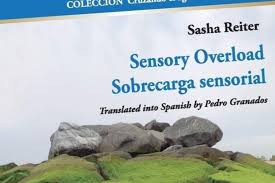
With the poems in this new book, Sasha Reiter takes to another level what he had already achieved in his first collection. Fundamentally, Reiter delves into a kind of intelligence and sensibility –which does not shun humor– in the manner of a Paul Gauguin or a César Vallejo; that is, rather post-anthropocentric. Or, in other words, where the myth is not pausterized, but is alive, gathering people together and fostering a live community.This alone sets Reiter apart from a legion of young and not so young poets, attentive in a unique way to themselves or to an oversized private space. Therefore, today and in the projection of this poetry toward the future, we do not find utopias or dystopias in a humanistic way; but, instead, a plunge –with eyelids wide open– toward another instance or condition of language: a knife which cuts flesh, seasons it slowly and then hands it out. Sasha Reiter’s poems not only make up the Bronx but also –from a cultural perspective and not merely a geographic one– Peru and, likewise, the academy placed together on the stage. They are, first of all, for eating, for countering a vast creative anemia prevailing throughout the entire world. –PEDRO GRANADOS
NOTA INTRODUCTORIA
Con los poemas de este nuevo libro, Sasha Reiter lleva a otro nivel lo que ya lograra en su primer poemario. En lo fundamental, Reiter ahonda en un tipo de inteligencia y sensibilidad –que no rehúye el humor– a lo Paul Gauguin o a lo César Vallejo; es decir, mas bien post-antropocéntrico. O, en otras palabras, donde el mito no anda pasteurizado; sino que está vivo, aglutinando a las personas y propiciando una comunidad viva. Esto, de por si, ya lo distingue de una legión de jóvenes y no tan jóvenes poetas, de aquí y de acullá, atentos de modo único a si mismos o a un sobredimensionado espacio privado. Por lo tanto, hoy y en la proyección de esta poesía hacia el futuro, no hallamos utopías ni distopías a la manera humanística; y sí, en cambio, una zambullida –con los párpados bien abiertos– hacia otro momento o condición del lenguaje: un cuchillo que corta la carne, que la sazona con parsimonia y la reparte. Los poemas de Sasha Reiter no solo constituyen el Bronx sino también –desde una perspectiva cultural y no meramente geográfica –el Perú y, asimismo, a la academia puestos juntos en escena. Ellos son ante todo para comer, para contrarrestar una vasta anemia creativa reinante en el mundo entero. –PEDRO GRANADOS