¿QUÉ FORMAS DE EMBARGO PUEDE TRABAR EL EJECUTOR COACTIVO DE UNA MUNICIPALIDAD?

[Visto: 1836 veces]

¿QUÉ FORMAS DE EMBARGO PUEDE TRABAR EL EJECUTOR COACTIVO DE UNA MUNICIPALIDAD?

MARIO ALVA MATTEUCCI

RESUMEN

Las medidas cautelares que puede trabar un Ejecutor Coactivo de una municipalidad no se rigen por la normatividad del Código

Tributario, sino por una ley específica que las regula. Nos referimos a la Ley del Procedimiento de Ejecución Coactiva, aprobada por la Ley N.° 26979 y modificada por la Ley N.° 28165, que tiene ciertos parámetros que debe cumplir dicho funcionario. En el caso de las medidas cautelares que puede trabar un Ejecutor Coactivo de la SUNAT, estas se rigen por el Código Tributario y el Reglamento de Cobranza Coactiva aprobado por Resolución de Superintendencia. El presente trabajo pretende mostrar los tipos de medidas cautelares que aplica un Ejecutor Coactivo de una municipalidad.

PALABRAS CLAVE: Ejecutor Coactivo / medidas cautelares / embargo / secuestro conservativo / Gobiernos Locales/ retención de cuentas

ABSTRACT

The precautionary measures that can be taken by a Coercive Executor of a municipality are not governed by the regulations of the Tax Code, but by a specific law that regulates them. We are referring to the Coercive Execution Procedure Law, approved by Law N.° 26979 and amended by Law N.° 28165, which has certain parameters to be complied with by such officer. In the case of the precautionary measures that can be taken by a Coercive Executor of SUNAT, these are governed by the Tax Code and the Coercive Collection Regulations approved by Resolution of Superintendence. The purpose of this paper is to show the types of precautionary measures applied by a Coercive Executor of a municipality.

KEYWORDS: Coercive Executor / precautionary measures / seizure / conservative seizure / Local Governments / withholding of accounts

TITLE: What Forms of Garnishment Can A Municipality’s Coercive Executor Take?

Si desea revisar el informe completo (SOLO EN ESPAÑOL) debe ingresar aquí: QUE FORMAS DE EMBARGO PUEDE TRABAR EL EJECUTOR COACTIVO DE UNA MUNICIPALIDAD

If you want to review the full report (ONLY IN SPANISH) you must enter here: QUE FORMAS DE EMBARGO PUEDE TRABAR EL EJECUTOR COACTIVO DE UNA MUNICIPALIDAD

¿CUÁLES SON LAS OPERACIONES EN LAS QUE NO SE DEBE APLICAR LA RETENCIÓN DEL IGV DE 3%?

[Visto: 1365 veces]

¿CUÁLES SON LAS OPERACIONES EN LAS QUE NO SE DEBE APLICAR LA RETENCIÓN DEL IGV DE 3%?

MARIO ALVA MATTEUCCI

El pasado 10 de setiembre del 2023 se publicó en el diario oficial El Peruano el texto de la Resolución de Superintendencia N.° 000186-2023/SUNAT, por medio de la cual se designa y excluye agentes de retención del impuesto general a las ventas, con el fin de actualizar el padrón de agentes de retención.

El texto del artículo 2 de dicha norma designa como agentes de retención a aquellos contribuyentes señalados en el anexo I y el artículo 3 de la misma Resolución excluye como agentes de retención a los que se consignan en el anexo II.

Desde el 1 octubre de 2023, los nuevos agentes retenedores han empezado a efectuar la retención del IGV de 3% , en cumplimiento de las obligaciones tributarias que les corresponde por tener tal condición. Sin embargo, existen algunas operaciones señaladas en el artículo 5 de la Resolución de Superintendencia N° 037-2002/SUNAT que no corresponde aplicar la retención.

Esas operaciones se mencionan en la siguiente publicación, la cual espero sea de utilidad.

Saludos cordiales

Mario Alva Matteucci

Si desea revisar el informe completo (SOLO EN ESPAÑOL) debe ingresar aquí: CUALES SON LAS OPERACIONES QUE NO SE EFECTUAN RETENCIONES DEL 3%

If you want to review the full report (ONLY IN SPANISH) you must enter here: CUALES SON LAS OPERACIONES QUE NO SE EFECTUAN RETENCIONES DEL 3%

¿LA APLICACIÓN DE LOS CRITERIOS ESG CONSTITUYE GASTO DEDUCIBLE?

[Visto: 1392 veces]

¿LA APLICACIÓN DE LOS CRITERIOS ESG CONSTITUYE GASTO DEDUCIBLE?

MARIO ALVA MATTEUCCI

RESUMEN

El inversionista cada día es más exigente con la información que debe obtener de las empresas en las que quiera aportar capitales, bien sea por las posibilidades de retorno de la misma, como también en la actividad a desarrollar. A veces se busca la inversión a corto plazo, la cual es a veces solo especulativa, como también existe la inversión a largo plazo, la cual tiene un tipo de análisis más complejo y que busca que las empresas sean sostenibles en el tiempo. Parte de la información que hoy en día los inversionistas procuran revisar es con la aplicación de criterios ESG, ligados a variables como el medio ambiente, el entorno social como también la gobernanza al interior de la empresa.

PALABRAS CLAVE: inversión a corto plazo / inversión a largo plazo / entorno social / gobierno corporativo / entorno ambiental / inversionista

ABSTRACT

The investor is more demanding every day with the information that must be obtained from the companies in which he wants to contribute capital, either by the possibilities of return of the same, as well as in the activity to be developed. Sometimes short-term investment is sought, which is sometimes only speculative, as well as long-term investment, which has a more complex type of analysis and seeks to ensure that companies are sustainable over time. Part of the information that investors today seek to review is the application of ESG criteria, linked to variables such as the environment, the social environment as well as governance within the company.

KEYWORDS: Keywords: short term investment / long term investment / social environment / corporate governance / environmental environment / investor

TITLE: Does The Application of ESG Criteria Constitute A Deductible Expense?

Si desea revisar el informe completo (SOLO EN ESPAÑOL) debe ingresar aquí: APLICACION DE CRITERIOS ESG – GASTO DEDUCIBLE

If you want to review the full report (ONLY IN SPANISH) you must enter here: APLICACION DE CRITERIOS ESG – GASTO DEDUCIBLE

LOS GASTOS DE DESARROLLO EN ACTIVIDADES MINERAS ¿CUÁNDO SON DEDUCIBLES?

[Visto: 1376 veces]

LOS GASTOS DE DESARROLLO EN ACTIVIDADES MINERAS ¿CUÁNDO SON DEDUCIBLES?

MARIO ALVA MATTEUCCI

RESUMEN
Los gastos de desarrollo en la actividad minera son importantes y, en la mayoría de casos, requieren un desembolso elevado de dinero, el cual está orientado a preparar las condiciones para ejecutar los proyectos mineros. La legislación del impuesto a la renta determina que son deducibles según las disposiciones de la Ley General de Minería, específicamente según el artículo 75 de dicha norma, tema que últimamente ha sido materia de análisis de la Casación N.° 93-2022-LIMA.

PALABRAS CLAVE: Amortización / gastos de desarrollo / minería / depreciación lineal / vinculación negativa / actividades mineras

ABSTRACT

Development expenses in the mining activity are important and, in most cases, require a high disbursement of money, which is oriented to prepare the conditions to execute the mining projects. The income tax legislation determines that they are deductible according to the provisions of the General Mining Law, specifically according to article 75 of such law, an issue that has recently been the subject of analysis in Case N.° 93-2022-LIMA.

KEYWORDS: Amortization / development expenses / mining / straight line depreciation / negative linkage / mining activities

TITLE: Development Expenses in Mining Activities. When Are They Deductible?

Si desea revisar el informe completo (SOLO EN ESPAÑOL) debe ingresar aquí: LOS GASTOS DE DESARROLLO EN ACTIVIDADES MINERAS

If you want to review the full report (ONLY IN SPANISH) you must enter here: LOS GASTOS DE DESARROLLO EN ACTIVIDADES MINERAS


GASTRONOMÍA Y TRIBUTACIÓN: UNA PEQUEÑA GUÍA PARA NO TENER CONTINGENCIAS CON EL FISCO

[Visto: 1608 veces]

GASTRONOMÍA Y TRIBUTACIÓN: UNA PEQUEÑA GUÍA PARA NO TENER CONTINGENCIAS CON EL FISCO

MARIO ALVA MATTEUCCI

RESUMEN

En el Perú, la gastronomía ha desarrollado de manera exponencial en los últimos años y ha sido reconocida a nivel internacional, lo cual es materia de orgullo para todos los peruanos. La gastronomía también es una especie de motor que impulsa el crecimiento de diversas actividades, desde la siembra de productos, la cosecha de los mismos, el transporte que permite acercarlos a los mercados, su comercialización hasta la utilización en restaurantes en los platos que diariamente se sirven a los comensales. Parte de este análisis implica también el cumplimiento de ciertas reglas tributarias, las cuales se desarrollarán de una manera breve, a efectos de evitar contingencias con el fisco.

PALABRAS CLAVE: gastronomía / restaurantes / alimentos / menú / contingencias / servicios

ABSTRACT

In Peru, gastronomy has developed exponentially in recent years and has been recognized internationally, which is a matter of pride for all Peruvians. Gastronomy is also a kind of engine that drives the growth of various activities, from the sowing of products, their harvest, the transportation that brings them to the markets, their commercialization to their use in restaurants in the dishes that are served to diners on a daily basis. Part of this analysis also implies the fulfillment of certain tax rules, which will be developed in a brief way, in order to avoid contingencies with the tax authorities.

KEYWORDS: gastronomy / restaurants / food / menu / contingencies / services

TITLE: Gastronomy and Taxation: A Small Guide to Avoid Tax Contingencies

Si desea revisar el informe completo (SOLO EN ESPAÑOL) debe ingresar aquí: GASTRONOMIA Y TRIBUTACION

If you want to review the full report (ONLY IN SPANISH) you must enter here: GASTRONOMIA Y TRIBUTACION

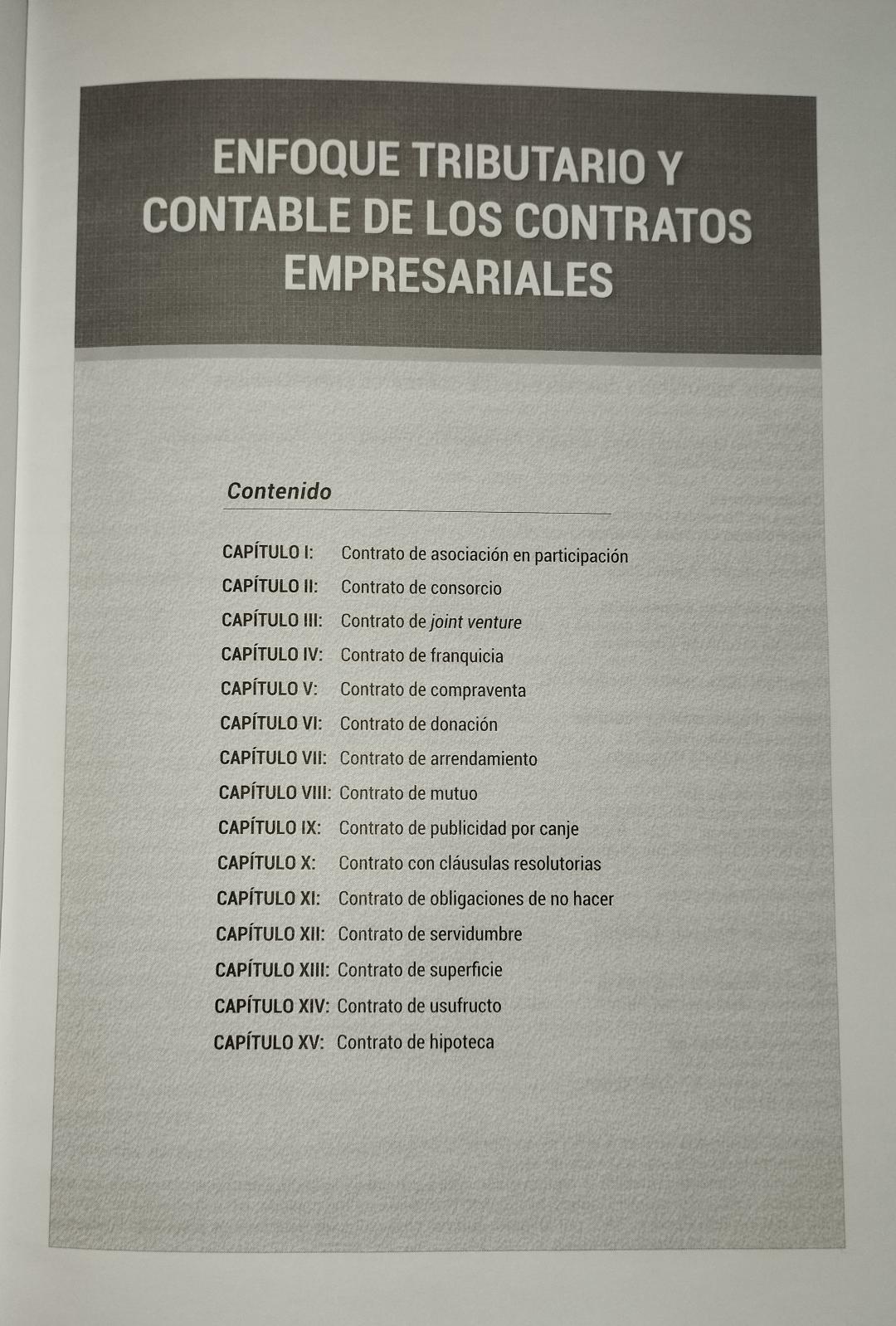
LIBRO: ENFOQUE TRIBUTARIO Y CONTABLE DE LOS CONTRATOS EMPRESARIALES

[Visto: 2547 veces]

LIBRO: ENFOQUE TRIBUTARIO Y CONTABLE DE LOS CONTRATOS EMPRESARIALES

FICHA TÉCNICA

Autores:

Mario Alva Matteucci

Henry Vásquez

Fernando Walter Effio Pereda

José Antonio Valdiviezo Rosado

Carlos Montoya Castillo

Colaboradores:

Jorge Luis Sernaqué Uracahua

José Eduardo Espinoza Cuadros

ISBN: 978–612-322-460-8

Páginas: 448

Editorial: Instituto Pacífico SAC

Impresión a cargo de: Pacífico Editores SAC

Primera edición

Lima, agosto 2023

EL CARÁCTER VINCULANTE DE LAS CASACIONES

[Visto: 2157 veces]

EL CARÁCTER VINCULANTE DE LAS CASACIONES

MARIO ALVA MATTEUCCI

El recurso de casación constituye un mecanismo por el cual la Corte Suprema de la república verifica si existe la comisión de una infracción en la aplicación normativa por parte de las distintas instancias del Poder Judicial, existiendo la posibilidad de que se determine que una sentencia se case, cuando existe una errónea aplicación del derecho al caso ventilado por las partes en la vía judicial.

Su finalidad no es que se verifique un nuevo análisis de las pruebas presentadas, por medio de una revalorización de los hechos; sino que solo se verifica, como se indicó, la correcta aplicación del derecho. En pocas palabras, no se permite que se emita un nuevo pronunciamiento judicial sobre el fondo del asunto materia de litigio.

En este sentido, se aprecia que el recurso de casación actualmente está siendo utilizado para poder revisar pronunciamientos que involucren materia tributaria y, en algunos casos, cuando la Corte Suprema las emite, se indica que la misma califica como un precedente vinculante.

Sigue leyendo

LA FISCALIDAD DEL HIDRÓGENO VERDE: OPORTUNIDADES Y DESAFÍOS

[Visto: 1339 veces]

LA FISCALIDAD DEL HIDRÓGENO VERDE: OPORTUNIDADES Y DESAFÍOS

MARIO ALVA MATTEUCCI

RESUMEN

El mundo actualmente procura disminuir el uso de combustibles fósiles, con el fin de evitar la contaminación ambiental y reducir la emisión de gases con efecto invernadero. Por ello, se está considerando el uso del hidrógeno verde como un combustible limpio y renovable. Pese a ello, su producción requiere del concurso de otro tipo de energías como la solar o la eólica, además del uso de grandes cantidades de agua y un proceso químico de electrólisis. Aún así, se aprecia que los beneficios de su consumo permiten mantener un ambiente menor de contaminación, requiriendo de algún modo un marco tributario acorde para poder masificar su uso.

PALABRAS CLAVE: hidrógeno verde / carbono / combustible limpio / electrólisis / energía solar / energía eólica

ABSTRACT

The world is currently trying to reduce the use of fossil fuels in order to avoid environmental pollution and reduce greenhouse gas emissions. Therefore, the use of green hydrogen is being considered as a clean and renewable fuel. However, its production requires the use of other types of energy, such as solar or wind power, as well as the use of large quantities of water and a chemical electrolysis process. Even so, it is appreciated that the benefits of its consumption allow maintaining a less polluted environment, requiring somehow a tax framework to be able to massif its use.

KEYWORDS: green hydrogen / carbon / clean fuel / electrolysis / solar energy / wind energy

TITLE: Green Hydrogen Taxation: Opportunities and Challenges

Si desea revisar el informe completo (SOLO EN ESPAÑOL) debe ingresar aquí: LA FISCALIDAD DEL HIDROGENO VERDE – OPORTUNIDADES Y DESAFIOS

If you want to review the full report (ONLY IN SPANISH) you must enter here: LA FISCALIDAD DEL HIDROGENO VERDE – OPORTUNIDADES Y DESAFIOS

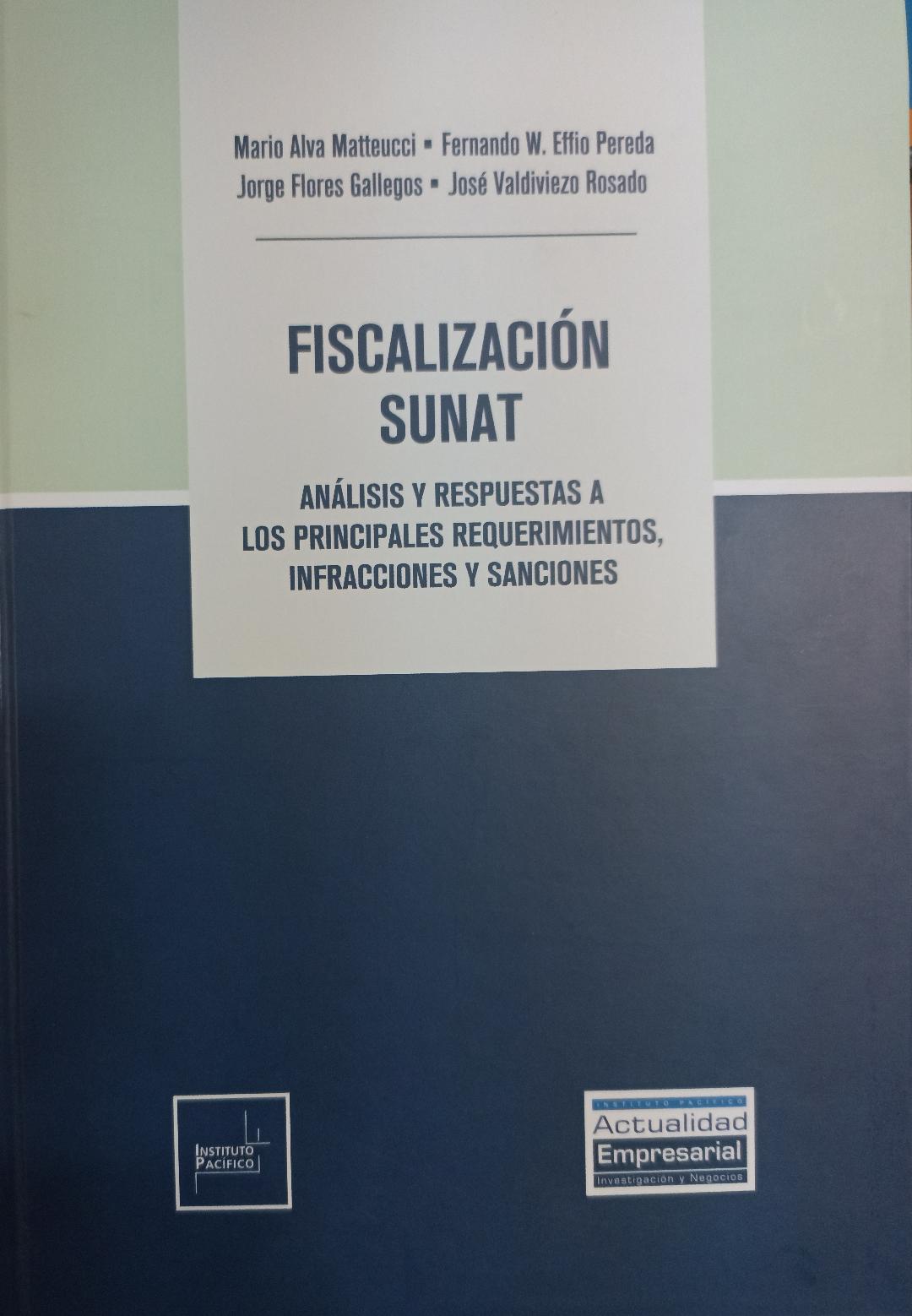

LIBRO: FISCALIZACIÓN SUNAT: Análisis y respuestas a los principales requerimientos, infracciones y sanciones

[Visto: 2343 veces]

LIBRO: FISCALIZACIÓN SUNAT: Análisis y respuestas a los principales requerimientos, infracciones y sanciones

FICHA TÉCNICA

Autores:

Mario Alva Matteucci

Fernando Walter Effio Pereda

José Antonio Valdiviezo Rosado

Jorge Flores Gallegos

ISBN: 978–612-322-450-9

Páginas: 543

Editorial: Instituto Pacífico SAC

Impresión a cargo de: Pacífico Editores SAC

Primera edición

Lima, junio 2023

¿Cómo adquirir esta publicación?

Para adquirir el libro deben comunicarse a los siguientes teléfonos:

  • 989253036
  • 943415074

El precio del libro es S/ 160

Si se menciona esta publicación al momento de su compra e indica “ALVA”, el precio del libro será de S/ 140.