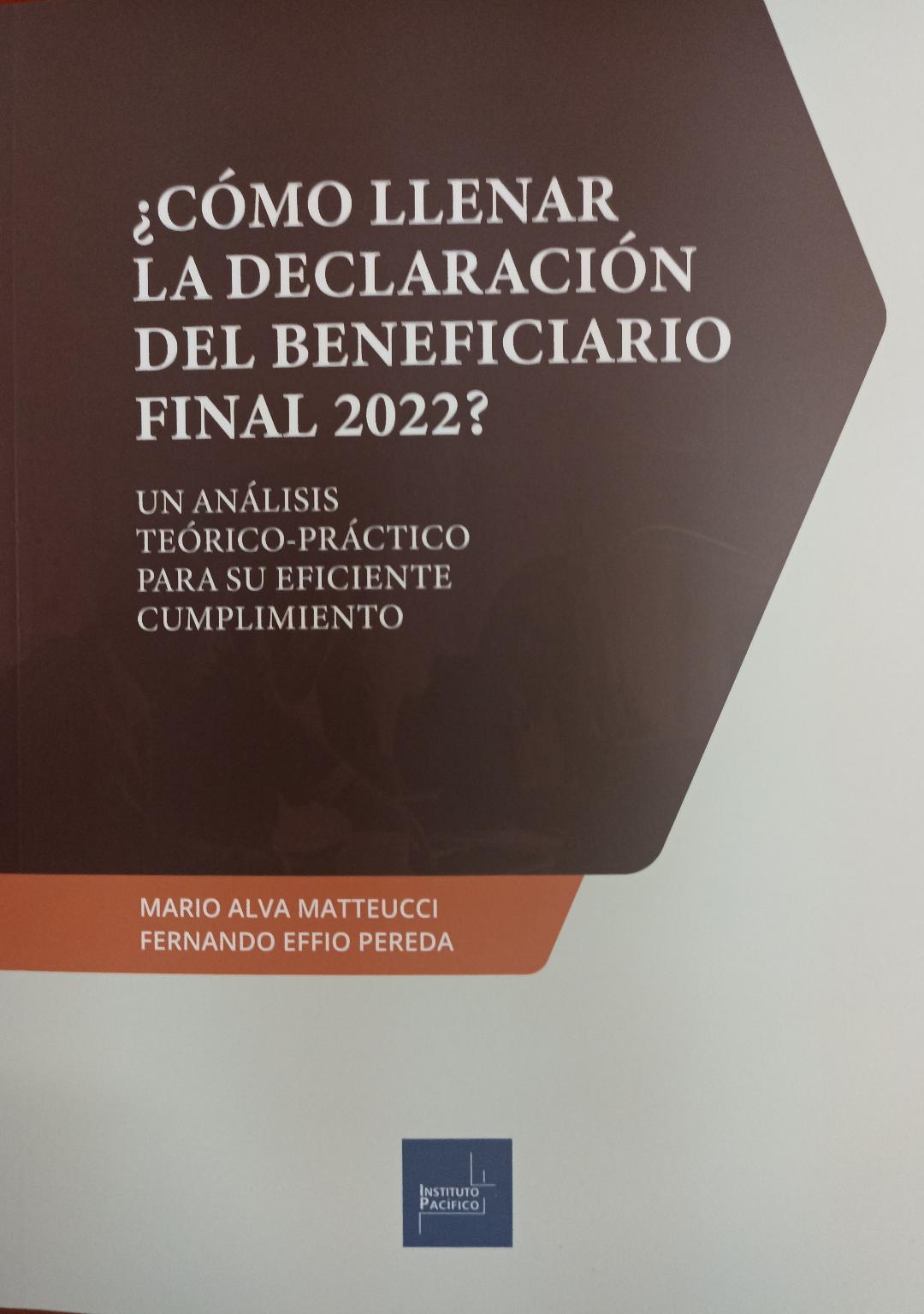
Archivo del Autor: JUAN MARIO ALVA MATTEUCCI

Acerca de JUAN MARIO ALVA MATTEUCCI

Abogado de la Pontificia Universidad Católica del Perú -PUCP. Magíster en Contabilidad con mención en Política y Administración Tributaria de la Universidad Nacional Mayor de San Marcos - UNMSM. Asociado activo del Instituto Peruano de Derecho Tributario - IPDT. Ha sido Miembro del Consejo Directivo del Servicio de Administración Tributaria - SAT de la Municipalidad Metropolitana de Lima (2019 - 2022). Profesor del Curso de Especialización Avanzada en Tributación de la Pontificia Universidad Católica del Perú. Profesor del Programa en Gestión Tributaria Empresarial dictado en ESAN. Ha sido Profesor de los cursos "Impuesto a la Renta Empresarial" y "Planeamiento Tributario" del PEE DE DERECHO CORPORATIVO en ESAN. Ha sido Profesor del curso "Impuestos Especiales II - Impuesto a la Renta e IGV" de la Facultad de Derecho y Ciencia Política de la Universidad Nacional Mayor de San Marcos. COAUTOR de los siguientes Libros: - "Infracciones y Sanciones del Código Tributario. Tomo I y II". - "Detracciones, Retenciones y Percepciones". - "Libro Homenaje a Armando Zolezzi Möller". - "Libro Homenaje a Luis Hernández Berenguel". - "Libro Homenaje a Francisco Escribano”. - "Libro Homenaje a Víctor Vargas Calderón". - "Libro Homenaje a Julio Fernández Cartagena". - "Guía de Operaciones Societarias y Comerciales". - "Manual de Detracciones, Retenciones y Percepciones". - "Aplicación Práctica del Impuesto a la Renta: Ejercicio 2015 - 2016". - "Delitos tributarios: Análisis de la Ley Penal Tributaria e incremento patrimonial no justificado". - "Manual de Infracciones y Sanciones Tributarias". - "Pérdidas Tributarias: Aspectos Tributarios y Contables". - "Fiscalización Electrónica y Desbalance Patrimonial: El uso de las cuentas bancarias empresariales para gastos personales". AUTOR de los siguientes libros: - "Análisis para la aplicación del Crédito Fiscal". - "Análisis práctico del Impuesto General a las Ventas". - "Aplicación práctica del IGV e ISC". - "Tratamiento tributario de las empresas constructoras e inmobiliarias". - "Evasión Tributaria". - "Incremento Patrimonial No Justificado de Personas Naturales". - "Implicancias tributarias de las transferencias de los bienes inmuebles: Para Personas Jurídicas y Personas Naturales". Autor de artículos para revistas universitarias y profesionales sobre diversos temas tributarios.

SI REGULARIZO LA DEUDA TRIBUTARIA, ¿PROCEDE LA ACCIÓN PENAL POR DELITO TRIBUTARIO?

[Visto: 1529 veces]

SI REGULARIZO LA DEUDA TRIBUTARIA, ¿PROCEDE LA ACCIÓN PENAL POR DELITO TRIUTARIO?

MARIO ALVA MATTEUCCI

ABSTRACT

Article 189 of the Tax Code contains a rule that allows the inadmissibility of criminal action for the commission of tax crimes indicated in the Criminal Tax Law, by the Public Ministry, in the event that the taxpayer can carry out the regularization of the debt prior to the initiation of the corresponding investigation ordered by the Prosecutor’s Office or,

failing this, the Tax Administration initiates the inspection procedure related to the tax and the period in which the aforementioned behaviors were carried out.

KEYWORDS

tax crime / regularization / tax debt / criminal action / criminal prosecution / inspection procedure

TITLE

If I regularize the tax debt, does the criminal action proceed for a tax crime?

RESUMEN

El artículo 189 del Código Tributario contiene una regla que permite la improcedencia de la acción penal por la comisión de delitos tributarios señalados en la Ley Penal Tributaria, por parte del Ministerio Público, en el supuesto de que el contribuyente pueda efectuar la regularización de la deuda tributaria antes de que se inicie la correspondiente

investigación dispuesta por la Fiscalía o, a falta de esta, la Administración Tributaria inicie el procedimiento de fiscalización relacionado al tributo y periodo en que se realizaron las conductas señaladas.

PALABRAS CLAVE

delito tributario / regularización / deuda tributaria / acción penal / persecución penal / procedimiento de fiscalización

Si desea revisar el informe completo (SOLO EN ESPAÑOL) debe ingresar aquí: SI REGULARIZO LA DEUDA TRIBUTARIA – PROCEDE LA ACCION PENAL POR DELITO TRIBUTARIO

If you want to review the full report (ONLY IN SPANISH) you must enter here: SI REGULARIZO LA DEUDA TRIBUTARIA – PROCEDE LA ACCION PENAL POR DELITO TRIBUTARIO

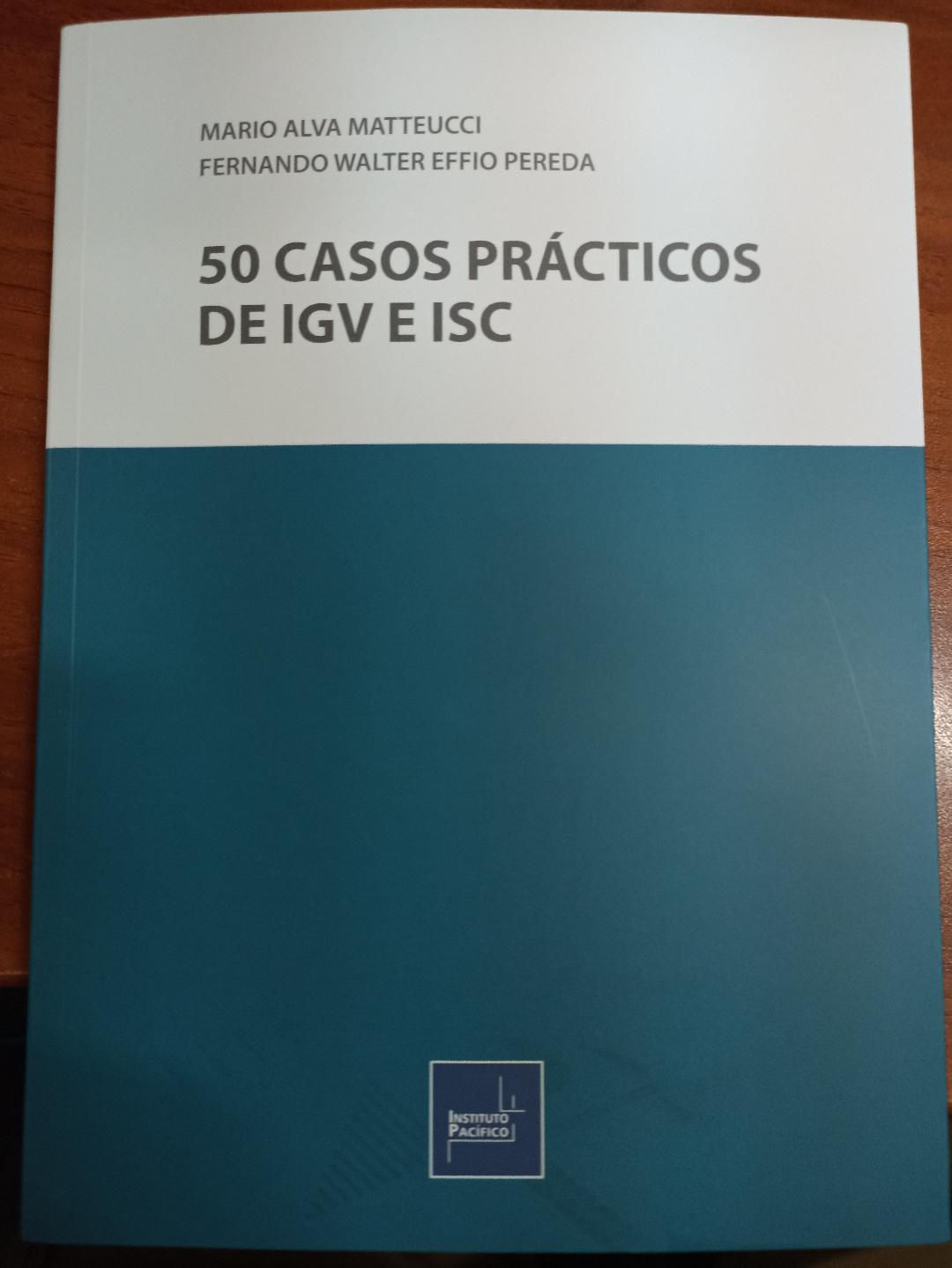
LIBRO: 50 CASOS PRÁCTICOS DE IGV E ISC

[Visto: 4078 veces]

LIBRO: 50 CASOS PRÁCTICOS DE IGV E ISC

VENTA DEL LIBRO

El precio del libro es S/ 40 (Cuarenta Soles)
La coordinación para comprarlo es a través del celular 969758190 con la señorita Bertha Mendoza del área de ventas.
En la oficina he logrado que si mencionan mi nombre al momento de comprarlo, el precio baja a S/ 35 (Treinta y cinco Soles)
Espero que esta información sea de utilidad.
Saludos cordiales
Mario Alva Matteucci

FICHA TÉCNICA:

Autores:

Mario Alva Matteucci

Fernando Walter Effio Pereda

ISBN: 978–612-322-376-2

Páginas: 126

Editorial: Instituto Pacífico SAC

Impresión a cargo de: Pacífico Editores SAC

Primera edición

Lima, julio 2022.

DEDUCCIÓN ADICIONAL DE 3 UIT EN RENTAS DE TRABAJO: TODAVÍA ESTÁ A TIEMPO

[Visto: 1610 veces]

DEDUCCIÓN ADICIONAL DE 3 UIT EN RENTAS DE TRABAJO: TODAVÍA ESTÁ A TIEMPO

MARIO ALVA MATTEUCCI

ABSTRACT

We are only five months away from the end of the year and many people still do not think about preparing their next Annual Income Tax Return, which corresponds to the taxable year 2022 and the one that will be presented in the year 2023. However, for generators of work income there is an additional deduction of 3 UIT that must be taken into account if you want to apply it in the aforementioned anual declaration. This deduction requires that operations that have been carried out during the year 2022 and not when it has ended be taken into consideration, for this reason we consider the explanation that we will make with this report pertinent.

KEYWORDS

professional fees / dentists / tour guides / domestic workers / rental of goods / hotels and restaurants

TITLE

Additional deduction of 3 UIT in income from work: it is still on time

RESUMEN

Estamos a solo cinco meses de la culminación del año y muchas personas no piensan aún en la elaboración de su próxima Declaración Jurada Anual del Impuesto a la Renta, que corresponde al ejercicio gravable 2022 y el que se presentará en el año 2023. Sin embargo, para los generadores de rentas de trabajo existe una deducción adicional de 3 UIT que debe tomarse en cuenta si es que se desea aplicarla en la mencionada declaración anual.

Esta deducción requiere que se tomen en consideración operaciones que se han efectuado
en el transcurso del año 2022 y no cuando el mismo ha concluido, por ello consideramos pertinente la explicación que efectuaremos con el presente informe.

PALABRAS CLAVE

honorarios profesionales / odontólogos / guías de turismo / trabajadores del hogar / arrendamiento de bienes / hoteles y restaurantes

Si desea revisar el informe completo (SOLO EN ESPAÑOL) debe ingresar aquí: DEDUCCION ADICIONAL DE 3 UIT EN RENTAS DE TRABAJO

If you want to review the full report (ONLY IN SPANISH) you must enter here: DEDUCCION ADICIONAL DE 3 UIT EN RENTAS DE TRABAJO


EL DELITO DE CONTABILIDAD PARALELA: ¿CUÁNDO SE CONFIGURA?

[Visto: 2154 veces]

EL DELITO DE CONTABILIDAD PARALELA: ¿CUÁNDO SE CONFIGURA?

MARIO ALVA MATTEUCCI

ABSTRACT
Law No. 31501 has recently been published, by means of which the text of the Penal Code has been modified, increasing the penalties for the crimes of fraudulent administration, as well as parallel accounting. It should be noted that both crimes are framed within the crimes related to fraud in the administration of legal persons. The doubt that may arise is whether these crimes have any connection with the tax issue, given that there is a Criminal Tax Law that considers the crime of tax fraud the same as the accounting crime.

KEYWORDS: parallel accounting / fraudulent administration / accounting crime / fraud / tax fraud / prison sentence

TITLE: The crime of parallel accounting: when is it configured?

RESUMEN

Recientemente se ha publicado la Ley N.° 31501, por medio de la cual se ha modificado el texto del Código Penal, incrementando las penas por los delitos de administración fraudulenta, al igual que el de contabilidad paralela. Cabe precisar que ambos delitos se encuentran enmarcados dentro de los delitos relacionados con el fraude en la administración de las personas jurídicas. La duda que puede surgir es si estos delitos tienen alguna vinculación con el tema tributario, habida cuenta que existe la Ley Penal Tributaria que considera el delito de defraudación tributaria al igual que el delito contable.

PALABRAS CLAVE: contabilidad paralela / administración fraudulenta / delito contable / fraude / defraudación tributaria / pena de cárcel

Si desea revisar el informe completo (SOLO EN ESPAÑOL) debe ingresar aquí: EL DELITO DE CONTABILIDAD PARALELA – CUANDO SE CONFIGURA

If you want to review the full report (ONLY IN SPANISH) you must enter here: EL DELITO DE CONTABILIDAD PARALELA – CUANDO SE CONFIGURA

BENEFICIARIO FINAL: PRINCIPALES INFRACCIONES Y SANCIONES

[Visto: 1893 veces]

BENEFICIARIO FINAL: PRINCIPALES INFRACCIONES Y SANCIONES

MARIO ALVA MATTEUCCI

ABSTRACT

The Declaration of the Final Beneficiary constitutes an affidavit of an informative type and must be presented by legal persons as well as legal entities, in accordance with the schedule established by SUNAT.

Failure to comply with this obligation entails the commission of an infraction that is sanctioned with a fine. There are several infractions related to this issue, which will be developed in this report, referring to the application of the discretion that SUNAT has in the gradualness of the sanctions and if it reaches all or only some linked to the Declaration of the Final beneficiary.

KEYWORDS: final beneficiary / omission of declaration / incomplete declaration / keeping information / informative declaration / gradualness

TITLE: Final beneficiary: main infractions and sanctions

RESUMEN

La Declaración del Beneficiario Final constituye una declaración jurada de tipo informativo y debe ser presentada por las personas jurídicas al igual que los entes jurídicos, de acuerdo con el cronograma establecido por la SUNAT. El incumplimiento de esta obligación acarrea la comisión de una infracción que se sanciona con multa.

Existen varias infracciones ligadas a este tema, las cuales serán desarrolladas en el presente informe, haciendo referencia la aplicación de la discrecionalidad que la SUNAT tiene en la gradualidad de las sanciones y si la misma alcanza a todas o solo a algunas vinculadas con la Declaración del Beneficiario Final.

PALABRAS CLAVE: beneficiario final / omisión de declaración / declaración incompleta / conservar información / declaración informativa / gradualidad

Si desea revisar el informe completo (SOLO EN ESPAÑOL) debe ingresar aquí: BENEFICIARIO FINAL – PRINCIPALES INFRACCIONES Y SANCIONES

If you want to review the full report (ONLY IN SPANISH) you must enter here: BENEFICIARIO FINAL – PRINCIPALES INFRACCIONES Y SANCIONES


LA FISCALIDAD DE LA ECONOMÍA CIRCULAR

[Visto: 1614 veces]

LA FISCALIDAD DE LA ECONOMÍA CIRCULAR

MARIO ALVA MATTEUCCI

ABSTRACT

The exploitation of resources constitutes a necessary constant for the production of goods, which once they were used, are discarded, generating a problem in the contamination of the environment. In recent years, the circular economy has been presented as an alternative, which allows goods to be reused, recycled, avoiding the destruction of natural resources as well as reducing the disposal of goods that would reduce pollution. The purpose of this report is to analyze the taxation applicable to the circular economy.

KEYWORDS

recycle / reuse / waste / natural resources / pollution / circular economy

TITLE: The taxation of the circular economy

RESUMEN

La explotación de los recursos constituye una constante necesaria para la producción de bienes, los cuales una vez que fueron utilizados, se desechan generando un problema en la contaminación del medio ambiente. En los últimos años se ha presentado la economía circular como alternativa, la cual permite reutilizar los bienes, reciclarlos, evitando la destrucción de los recursos naturales al igual que reducir la eliminación de bienes que reducirían la contaminación. El motivo del presente informe es analizar la fiscalidad aplicable a la economía circular.

PALABRAS CLAVE: reciclar / rehusar / residuos / recursos naturales / contaminación / economía circular

Si desea revisar el informe completo (SOLO EN ESPAÑOL) debe ingresar aquí: LA FISCALIDAD DE LA ECONOMIA CIRCULAR 

If you want to review the full report (ONLY IN SPANISH) you must enter here: LA FISCALIDAD DE LA ECONOMIA CIRCULAR

¿CÓMO SE DETERMINA AL BENEFICIARIO FINAL EN LAS PERSONAS JURÍDICAS?

[Visto: 1620 veces]

¿CÓMO SE DETERMINA AL BENEFICIARIO FINAL EN LAS PERSONAS JURÍDICAS?

MARIO ALVA MATTEUCCI

ABSTRACT

As a result of the publication of Superintendency Resolution No. 041-2022/SUNAT, the Tax Administration has taken up the issue of submitting the sworn statement where the final beneficiary of the companies must be identified, as in the case of legal entities. This last rule has determined the presentation considering the net income of the previous year as parameters, establishing three dates to be met between the years 2022 and 2023. However, the question arises whether the PRICOS that presented their final beneficiary declaration in 2019 must again submit this return or only taxpayers who meet the level of income expressly indicated in the rule subject to review.

KEYWORDS: final beneficiary / legal persons / legal entities / informative declaration / investment fund / autonomous equity

TITLE: How is the final beneficiary determined in legal persons?

RESUMEN

A raíz de la publicación de la Resolución de Superintendencia N.° 041-2022/SUNAT, la Administración Tributaria ha retomado el tema de la presentación de la declaración jurada donde se debe identificar al beneficiario final de las empresas, al igual que en el caso de los entes jurídicos. Esta última norma ha determinado la presentación considerando como parámetros los ingresos netos del ejercicio anterior, estableciendo tres fechas a cumplir entre los años 2022 y 2023. Sin embargo, surge la duda si los PRICOS que presentaron su declaración del beneficiario final en el 2019 deben nuevamente presentar esta declaración o solo los contribuyentes que cumplan el nivel de ingresos indicado expresamente en la norma materia de revisión.

PALABRAS CLAVE: beneficiario final / personas jurídicas / entes jurídicos / declaración informativa / fondo de inversión / patrimonio autónomo

Si desea revisar el informe completo (SOLO EN ESPAÑOL) debe ingresar aquí: COMO SE DETERMINA AL BENEFICIARIO FINAL EN LAS PERSONAS JURIDICAS INFORME

If you want to review the full report (ONLY IN SPANISH) you must enter here: COMO SE DETERMINA AL BENEFICIARIO FINAL EN LAS PERSONAS JURIDICAS INFORME

¿ES CONVENIENTE LA EXONERACIÓN TEMPORAL DEL IGV?: problemas que se pueden presentar

[Visto: 1847 veces]

¿ES CONVENIENTE LA EXONERACIÓN TEMPORAL DEL IGV?: problemas que se pueden presentar

MARIO ALVA MATTEUCCI

RESUMEN

El Congreso de la República aprobó por insistencia la Ley N° 31452, por medio de la cual otorgó una exoneración temporal del IGV a determinados alimentos que conforman la canasta básica familiar, con la finalidad de atenuar el impacto inflacionario generado por la coyuntura económica internacional. Sin embargo, la aprobación de esta exoneración temporal no toma en consideración la mecánica propia de la aplicación del IGV como un impuesto que grava únicamente el valor agregado, generando una distorsión que impedirá a los proveedores de dichos bienes poder descontar el crédito fiscal de sus adquisiciones, lo que se reflejará en el costo del producto que terminará encareciéndolo en lugar de abaratarlo como se esperaba.

PALABRAS CLAVE

exoneración temporal / crédito fiscal / débito fiscal / valor agregado / deducción / distorsión

TITLE

Is temporary VAT exemption convenient?: problems that may arise

ABSTRACT

The Congress of the Republic insistently approved Law No. 31452, by means of which it granted a temporary exemption from the IGV to certain foods that make up the basic family basket, in order to mitigate the inflationary impact generated by the international economic situation. However, the approval of this temporary exemption does not take into consideration the mechanics of the application of the IGV as a tax that is levied only on value added, generating a distortion that will prevent suppliers of said goods from being able to deduct the tax credit from their acquisitions, which will be reflected in the cost of the product that will end up making it more expensive instead of cheaper as expected.

KEYWORDS

temporary exemption / tax credit / tax debit / value added / deduction / distortion

NOTA: Con fecha sábado 30 de abril de 2022 se ha publicado en el Diario Oficial El Peruano el texto del Decreto Supremo N° 083-2022-EF, mediante el cual se aprueban las normas reglamentarias de la Ley N° 3245, Ley que exonera del Impuesto General a las Ventas a los alimentos de la canasta básica familiar.

Debemos precisar que al momento de elaborar el presente informe, esta norma aún no había sido publicada.

Si desea revisar el informe completo (SOLO EN ESPAÑOL) debe ingresar aquí: ES CONVENIENTE LA EXONERACION TEMPORAL DEL IGV

 If you want to review the full report (ONLY IN SPANISH) you must enter here: ES CONVENIENTE LA EXONERACION TEMPORAL DEL IGV


LOS SUJETOS SIN CAPACIDAD OPERATIVA (SSCO)

[Visto: 3956 veces]

LOS SUJETOS SIN CAPACIDAD OPERATIVA (SSCO)

MARIO ALVA MATTEUCCI

RESUMEN

Existen empresas constituidas formalmente solo en el papel, pero que tienen un nivel elevado de operaciones, por las cuales entregan facturas a terceros a fin de que estos puedan justificar gasto, costo y/o crédito fiscal. Este nivel de operaciones no se justifica, ya que no tienen trabajadores, no cuentan con activos al igual que capacidad financiera para afrontar las actividades que respalden su desempeño. Como un mecanismo para controlar la evasión tributaria, se ha publicado el Decreto Legislativo N° 1532, el cual regula el procedimiento que se debe seguir para establecer la condición de sujeto sin capacidad operativa.

PALABRAS CLAVE

evasión tributaria / capacidad operativa / capacidad financiera / empresas fantasmas / facturas falsas / cruces de información

TITLE

SUBJECTS WITHOUT OPERATIONAL CAPACITY

ABSTRACT

There are companies formally constituted only on paper, but that have a high level of operations, for which they deliver invoices to third parties so that they can justify expenses, costs and/or tax credits. This level of operations is not justified, since they do not have workers, they do not have assets as well as the financial capacity to face the activities that support their performance. As a mechanism to control tax evasion, Legislative Decree No. 1532 has been published, which regulates the procedure that must be followed to establish the status of subject without operational capacity.

KEYWORDS

tax evasion / operational capacity / financial capacity / ghost companies / false invoices / cross information

Si desea revisar el informe completo (SOLO EN ESPAÑOL) debe ingresar aquí: SUJETOS SIN CAPACIDAD OPERATIVA – SSCO

If you want to review the full report (ONLY IN SPANISH) you must enter here: SUJETOS SIN CAPACIDAD OPERATIVA – SSCO

#marioalvamatteucci

MATRIMONIO Y TRIBUTACIÓN: LOS REGALOS DE BODA

[Visto: 2270 veces]

MATRIMONIO Y TRIBUTACIÓN: LOS REGALOS DE BODA

MARIO ALVA MATTEUCCI

RESUMEN

Una reciente modificatoria de la Ley del Impuesto a la Renta ha efectuado cambios en la forma de sustentar las donaciones frente a la presunción de incremento patrimonial no justificado, que puede considerar la Administración Tributaria, específicamente, en el caso de las donaciones en las bodas. Este cambio surte efectos a partir del año 2023 y, de seguro, generará algunas situaciones incómodas en las personas, pero que necesariamente deberán tomar en cuenta para evitar contingencias futuras con el fisco.

PALABRAS CLAVE: regalos / matrimonio / incremento patrimonial no justificado / presunción / donaciones / bodas

TITLE: Marriage and taxation: wedding gifts

ABSTRACT
A recent amendment to the Income Tax Law has made changes in the way of supporting donations against the presumption of an unjustified increase in wealth, which the Tax Administration may consider, specifically, in the case of donations at weddings. This change takes effect from the year 2023 and, for sure, will generate some uncomfortable situations in people, but that they must necessarily take into account to avoid future contingencies with the treasury.

KEYWORDS: gifts / marriage / unjustified increase in wealth / presumption / donations / weddings

Si desea revisar el informe completo (SOLO EN ESPAÑOL) debe ingresar aquí: MATRIMONIO Y TRIBUTACION – LOS REGALOS DE BODA

If you want to review the full report (ONLY IN SPANISH) you must enter here: MATRIMONIO Y TRIBUTACION – LOS REGALOS DE BODA

#marioalvamatteucci