Entre vivos y plebeyos
febrero 13, 2013Un mundo de cien personas (video)
febrero 11, 2013Un mundo de cien personas
febrero 10, 2013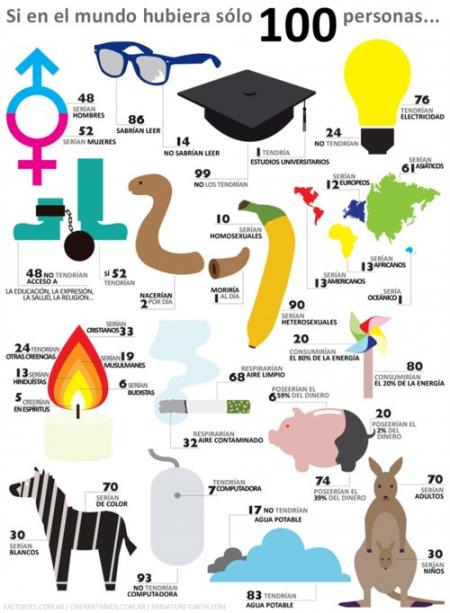
Experimentos sociales para luchar contra la pobreza
octubre 17, 2012Para comprender la crisis financiera (Estados Unidos)
septiembre 07, 2012Españistan (para comprender la crisis española)
agosto 30, 2012La educación prohibida
agosto 26, 2012Ver web de los autores aquí Sigue leyendo
Informe Global sobre religiosidad
agosto 12, 2012WIN-Gallup International. GLOBAL INDEX OF RELIGIOSITY AND ATHEISM – 2012
The WIN-Gallup International ‘Religion and Atheism Index’ which
measures global self-perceptions on beliefs is based on interviews
with more than 50,000 men and women selected from 57
countries across the globe in five continents. The survey also
provides trend data for shifts in attitudes since 2005.
The Religiosity Index represents the percentage of the population
who self-describe themselves as ‘a religious person’ in the question
worded as: Irrespective of whether you attend a place of worship
or not, would you say you are a religious person, not a religious
persons or a convinced atheist?
Atheism Index represents the percentage of population who selfdescribe themselves as convinced atheists in the Question
reported above.
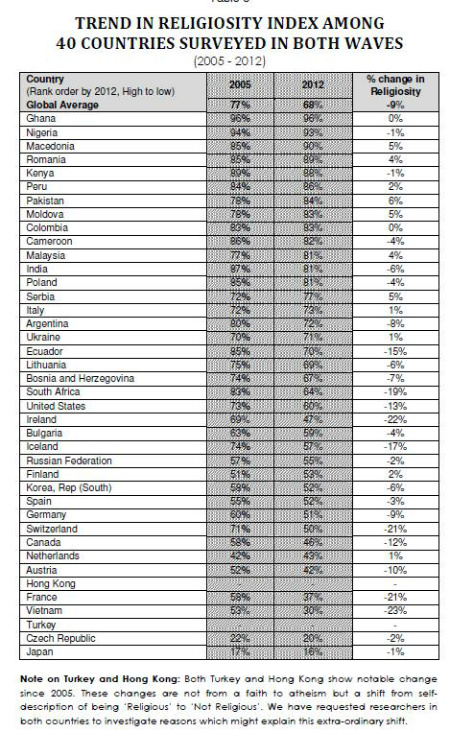
Leer informa completo (inglés) aquí Sigue leyendo
Democracy maps
julio 29, 2012Las siguientes instituciones ofrecen clasificaciones de los países para rankear su perfil democrático:
World Audit: :
We define democracy via the criteria of Human Rights; Political Rights; Free Speech; and the Absence of Public Corruption.
Ver aquí: http://www.worldaudit.org/audits.htm
Global democracy ranking:
The Democracy Ranking applies the following conceptual formula:
Quality of Democracy = (freedom & other characteristics of the political system) & (performance of the non-political dimensions). The non-political dimensions are: gender, economy, knowledge, health, and the environment.
Ver aquí: http://www.democracyranking.org/en/ranking.htm
Index de Buena Vida (better life) de la OCDE
julio 15, 2012La OCDE está desarrollando bases de datos para comparar los avances de los 34 países que la conforman en relación a 11 tópicos que permitan una visión más amplia del desarrollo. La propia OCDE reconoce el sesgo más economicista que ha tenido el valorar el desarrollo solo desde variables económicas:
Is life really getting better? How can we tell? What are the key ingredients to improving life – is it better education, environment, healthcare, housing, or working hours? Does progress mean the same thing to all people or in all countries and societies?”
En la siguiente tabla se observa la diversidad de dichos tópicos que va más allá del medir solo los ingresos económicos:
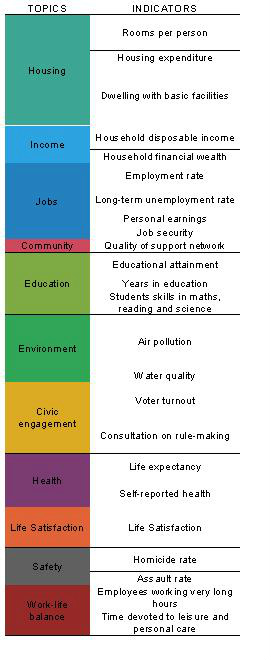
En la siguiente dirección se puede realizar las comparaciones en base a los tópicos sea de forma comparativa o por país: http://www.oecdbetterlifeindex.org/
Sigue leyendo